The way consumers discover, evaluate, and purchase products has changed more in the last decade than in the previous fifty years. Smartphones, high-speed internet, social media, artificial intelligence, e-commerce, and digital payments have fundamentally transformed the buying journey. As a result, digital adoption is rewriting the new consumption rules, forcing businesses to rethink how they engage with customers.
Consumers today expect speed, convenience, personalization, transparency, and seamless experiences across every touchpoint. Businesses that continue to rely solely on conventional methods risk losing relevance in an increasingly digital-first world.
Understanding how fast the adoption rate is and recognizing what conventional businesses need to do to catch up is now essential for long-term growth and competitiveness.
The Digital Consumer Has Evolved
Today’s customer is more informed, connected, and empowered than ever before. Before making a purchase, consumers typically:
- Search online for information.
- Compare products and prices.
- Read customer reviews.
- Watch product videos.
- Follow brands on social media.
- Seek recommendations from influencers and peers.
- Complete purchases through mobile devices.
The traditional linear buying journey has evolved into a dynamic, multi-channel experience where customers interact with brands across websites, search engines, social media platforms, messaging apps, and online marketplaces.
Businesses must now be present wherever their customers are spending their digital time.
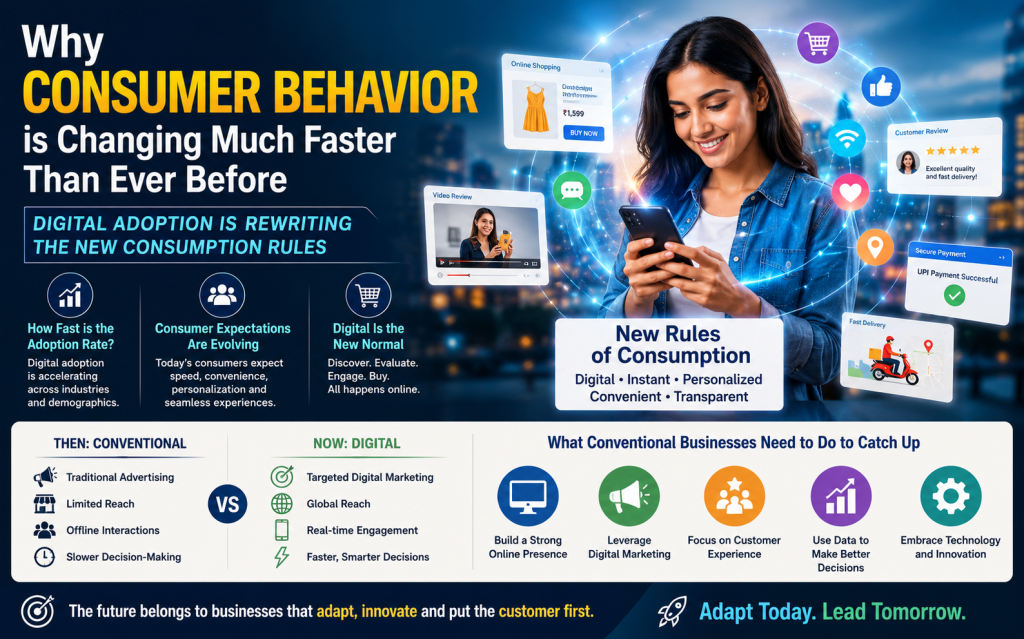
Digital Adoption Is Rewriting the New Consumption Rules
One of the biggest forces behind changing consumer behavior is rapid digital adoption.
Technology is no longer just supporting businesses—it is shaping how people live, communicate, shop, learn, and make decisions.
Today’s consumers expect:
- Instant access to information
- Personalized recommendations
- Fast customer service
- Secure digital payments
- Home delivery
- Mobile-friendly experiences
- Real-time communication
- Transparent pricing
These expectations have become the new consumption rules.
Consumers no longer compare businesses only with direct competitors—they compare every experience with the best digital experiences they have ever had.
If food delivery apps provide one-click ordering, customers expect similar convenience from retailers. If online banking offers instant transactions, customers expect fast and seamless payment options everywhere.
Digital experiences are setting new standards across industries.
How Fast Is the Adoption Rate?
The speed of digital adoption is unprecedented.
Several trends highlight this transformation:
Smartphones Everywhere
Millions of consumers now carry powerful computers in their pockets, enabling them to research, compare, and purchase products anytime and anywhere.
Explosive Internet Usage
Affordable internet access has connected urban and rural consumers alike, making digital channels accessible to businesses of every size.
E-commerce Growth
Online shopping has become part of everyday life, with customers purchasing everything from groceries and electronics to healthcare services and education online.
Digital Payments
The widespread adoption of UPI, mobile wallets, and contactless payments has reduced dependence on cash while increasing consumer confidence in digital transactions.
Social Commerce
Platforms like Instagram, Facebook, and YouTube are no longer just entertainment channels—they have become major shopping destinations where customers discover, evaluate, and purchase products.
Consumer adoption that once took years now happens in months, and sometimes even weeks.
Why Consumer Behavior Changes So Quickly
Several factors are accelerating consumer behavior changes:
Continuous Technological Innovation
New technologies emerge almost every year, changing customer expectations and creating better purchasing experiences.
Social Media Influence
Consumers are constantly exposed to new brands, trends, recommendations, and opinions that influence buying decisions.
Artificial Intelligence
AI-powered recommendations personalize shopping experiences, making product discovery faster and more relevant.
Information Accessibility
Customers can compare dozens of brands within minutes, making price, quality, and reputation more transparent than ever.
Greater Convenience
Consumers naturally gravitate toward businesses that save time, reduce effort, and simplify decision-making.
Convenience has become one of the strongest competitive advantages in today’s marketplace.
What Conventional Businesses Need to Do to Catch Up
Many traditional businesses still depend heavily on walk-in customers, referrals, and offline marketing. While these remain valuable, they are no longer sufficient.
To stay competitive, conventional businesses should focus on digital transformation.
Build a Strong Online Presence
Every business should have:
- A professional website
- Google Business Profile
- Active social media accounts
- Accurate contact information
- Customer reviews
Visibility begins with being discoverable online.
Embrace Digital Marketing
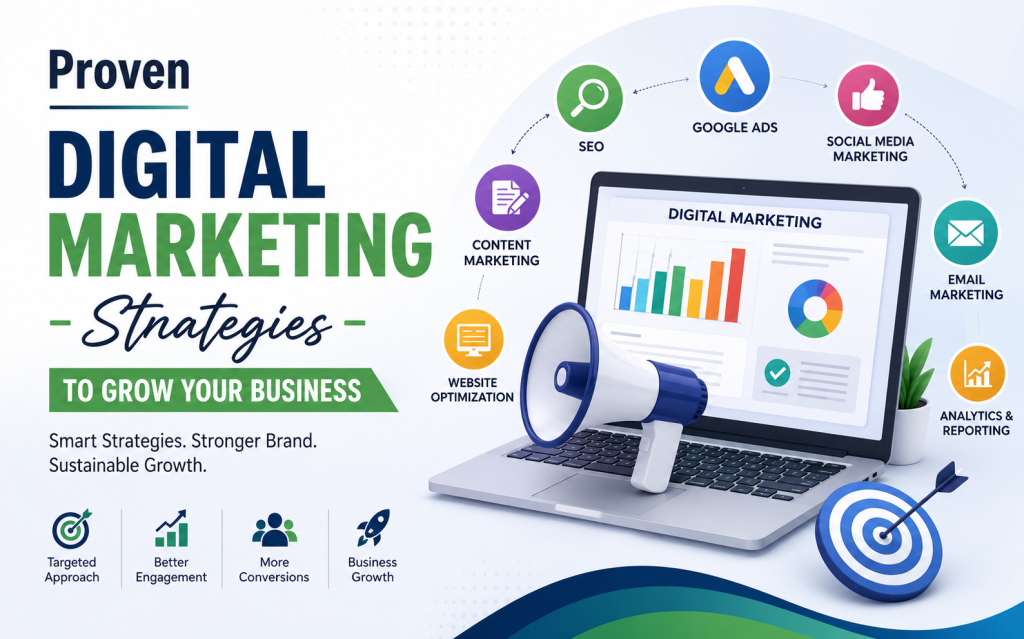
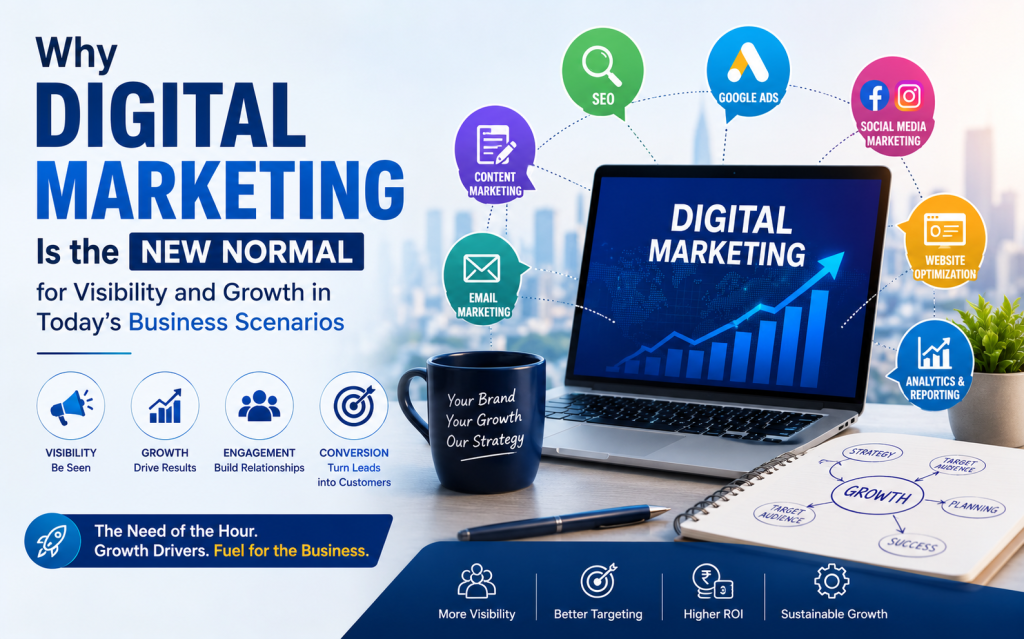
Digital marketing helps businesses reach customers where they spend most of their time.
Effective channels include:
- Search Engine Optimization (SEO)
- Google Ads
- Social Media Marketing
- Email Marketing
- Content Marketing
- Video Marketing
These channels increase visibility while generating measurable business results.
Improve Customer Experience
Modern customers expect:
- Fast response times
- Mobile-friendly websites
- Easy navigation
- Online appointment booking
- Secure payments
- Personalized communication
Businesses that simplify the customer journey gain a significant competitive advantage.
Use Data to Make Better Decisions
Digital platforms provide valuable insights into customer behavior, preferences, and buying patterns.
Businesses can monitor:
- Website traffic
- Popular products
- Customer demographics
- Campaign performance
- Conversion rates
- Customer retention
Data-driven decisions lead to more effective marketing and better business outcomes.
The Importance of Being Customer-Centric
Successful businesses no longer focus only on selling products—they focus on solving customer problems.
A customer-centric business:
- Listens actively to feedback.
- Adapts quickly to changing preferences.
- Creates personalized experiences.
- Delivers consistent value.
- Builds long-term relationships.
Companies that continually evolve with their customers earn greater loyalty and stronger brand advocacy.
Businesses That Adapt Will Lead the Future
History has shown that industries evolve alongside consumer behavior.
Businesses that embraced online banking, e-commerce, food delivery, digital entertainment, and mobile payments gained a competitive edge, while others struggled to keep pace.
The next wave of transformation—powered by AI, automation, voice search, augmented reality, and predictive analytics—will further accelerate consumer expectations.
Organizations that invest in digital capabilities today will be better positioned for tomorrow’s opportunities.